Hubble_s · The behavior routine for high-performing teams

What if your team’s behaviors were your best growth lever?

Find the few behaviors that move your numbers, then check on them in fifteen minutes of a meeting you already hold. The diagnostic draws on ten years of data from 139 business units totalling 455,000 employees.

Contact sales

Free to start, no credit card.

Trusted by teams at

The Space Shuttle Atlantis lifting off from the launch pad
If your objective is to01 / 05

Grow revenue

At one of our clients+7.4%

business growth in 2025 versus 2024

Behaviors to develop

  • Be customer-obsessed
  • Commit to action
  • Lead the way

Frictions to reduce

  • Meetings with no decision
  • Information hoarding
A classic sailing yacht with full sails on a blue sea
If your objective is to02 / 05

Develop margin

At one of our clients+112 bps

operating margin in 2025

Behaviors to develop

  • Get to the essentials
  • Decide with data
  • Focus and persevere

Frictions to reduce

  • Systematic sign-off
The red and white Westerheversand lighthouse on green salt meadows
If your objective is to03 / 05

Raise service quality

At one of our clients3×

fewer critical incidents, 2022 versus 2019

Behaviors to develop

  • Give continuous feedback
  • Collaborate proactively
  • Transparency and trust

Frictions to reduce

  • Information hoarding
  • Systematic sign-off
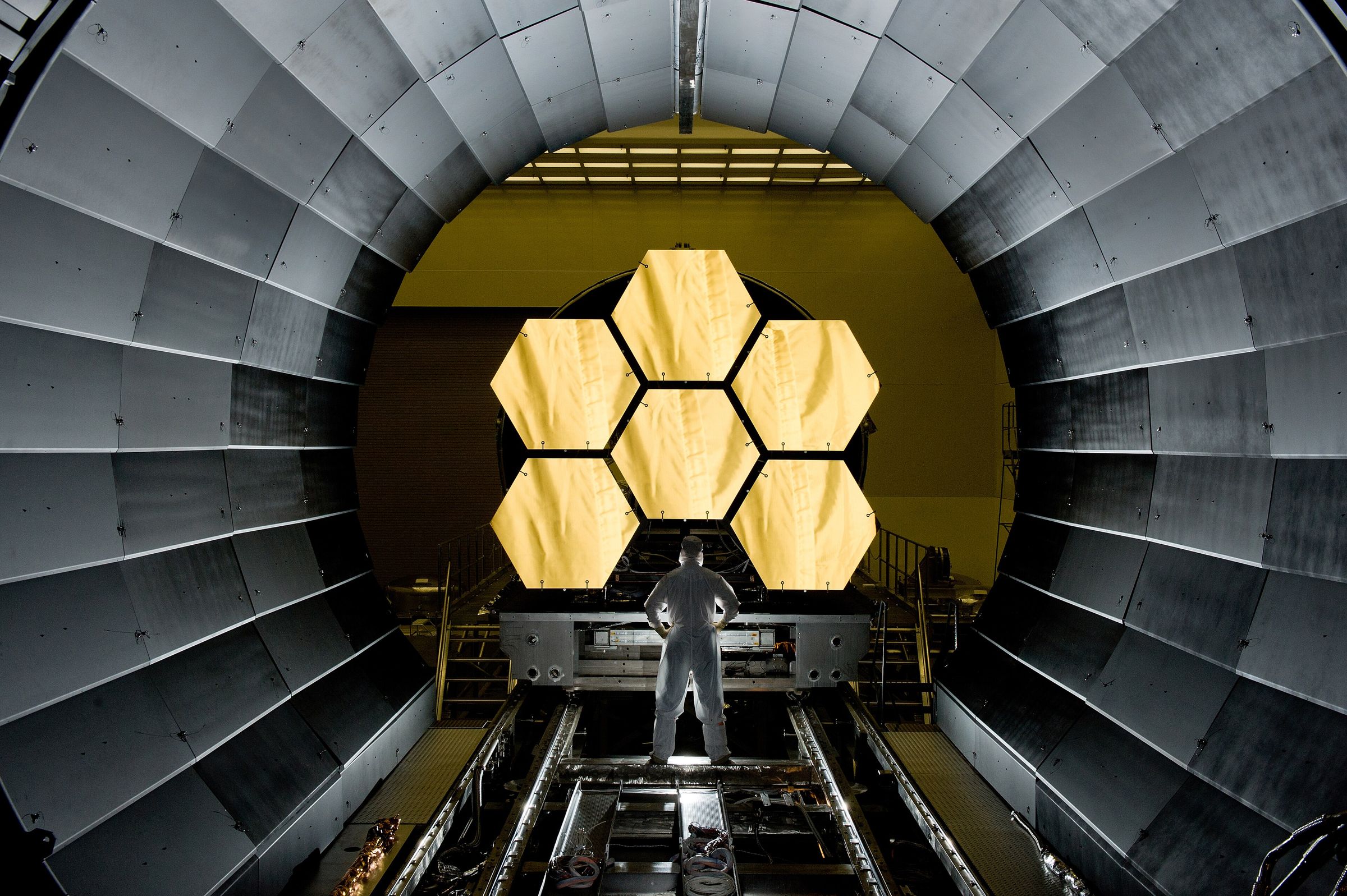
Engineer standing before the gold hexagonal mirrors of the James Webb Space Telescope
If your objective is to04 / 05

Innovate faster

At one of our clients+11

new investments, and an Innovation unit launched in 2018

Behaviors to develop

  • Embrace change
  • Facing the discomfort
  • Lead the way

Frictions to reduce

  • Systematic sign-off
  • Meetings with no decision
A murmuration of starlings moving as one at dusk
If your objective is to05 / 05

Boost engagement

Behaviors to develop

  • Give continuous feedback
  • Transparency and trust
  • Collaborate proactively

Frictions to reduce

  • Information hoarding
  • Meetings with no decision

Photos: NASA / Scott Andrews (public domain) · Myrabella (CC BY-SA 4.0) · Marco Leiter (CC BY-SA 4.0) · NASA/MSFC/David Higginbotham (public domain) · Tanya Hart (CC BY-SA 2.0), via Wikimedia Commons

95%of the gap in sales growth between business units is explained by their behaviors, once external factors are taken out. 99% for operating margin, 91% for service quality. Hubble_s analysis of 93 business units, 2020 to 2023.

These five are examples. Yours might be cutting costs, merging two teams or winning back customers: tell our agent, and it suggests the behaviors that drive it.

The product

So, how does your team get there?

Ninety seconds to see how Hubble_s helps your team pick the right behaviors, act on them each time the team meets, and watch the results move.

No one sees your answer. Not your manager, not us. Privacy is our #1 priority.

The routine only works if people say what they actually see.

  • No individual answer, ever.Each vote carries a one-time token with no link back to a person.
  • Results appear from 3 answers.Below that, nothing is shown.
  • Your data stays in the EU.Export or delete it any time.
Client transformations

What changed for teams like yours?

Six clients, six different problems: a merger, a new operating model, a new marketing model, a culture change, service quality and innovation.

A transformation plan the team built itself.

A Danone business unit in Spain defined its transformation with Hubble_s: a behavioral roadmap, an audit of the critical processes to change, and a communication plan.

“This transformation capability will be one of our key competitive advantages.”

Patricia Oliva · General Manager, Danone

Roadmap

A behavioral roadmap for the integration

Audit

Critical processes reviewed for change

Comms

A communication plan, built together

A different post-merger integration plan.

Kinetico used Hubble_s to see which behaviors to change and which to keep, and to set behavioral objectives for its leadership team tied to specific results. It then designed its integration of an acquisition differently.

“My company is a factory of individual and collective behaviors.”

Bernhard Scholten · President, Kinetico

+40%

EBITDA year over year, as reported by the client

Plan

Post-merger integration defined differently

Targets

Behavioral objectives for leadership, tied to results

From product-led to consumer-obsessed.

Emmi built a new marketing model and is rolling it out across the group. The lesson it draws: the change is only marginally about tools and models, and mostly about the cultural shift needed to become truly consumer-centric.

“I can only recommend embarking on that journey with Hubble_s as a partner.”

Thomas Morf · CMO, Emmi Group · Read the case

+48%

productive behaviors after 12 months

78%

saw a more consumer-centric company after 6 months

83%

back the transformation effort

High-performing teams, the new Danone culture.

Danone's global category teams rebuilt engagement across 700 people: own the behaviors, act on the root causes, and keep a bi-weekly conversation routine.

Global category teams · 700 people · Read the case

+28 pts

prevalence of the 5 Danone behaviors, 48% to 76%

+7.4%

business growth in 2025 versus 2024

+112 bps

operating margin in 2025

Excellent incident management, as a team behavior.

Santander's 700+ incident-management staff in Spain and abroad worked on the habits behind incident response. Critical incidents fell 3× between 2019 and 2022.

“We finally talk about the elephant in the room without starting little fires everywhere.”

Monica Sanchez-Luengo · Head of Change Management · Read the case

3×

fewer critical incidents, 2022 versus 2019

−42%

prevalence of frictions

70%

saw service quality improve

Turning “we should innovate” into 11 new investments.

Grupo Planeta, a publishing, media and education group of 9,000 people, measured which innovation behaviors were already present in every division, and which organizational frictions were blocking the rest.

Company-wide · 9,000 people · Read the case

41%

productive behaviors at the start: the baseline to lift

2018

a dedicated Innovation unit launched

+11

new investments now in flight

139

business units we have worked with

455,000

employees in those business units

19

countries, in 4 regions

White paper

The behaviors that make teams win

Ten years of Hubble_s research: the framework of winning behaviors, the keep / develop / eliminate method, and concrete cases.

hubble_s · 10 years of researchThe behaviors that make teams winWhite paper

What could your team do with fifteen minutes of each team meeting?

Set it up today and run your first check-in this week.

Contact sales
A 2-minute tour

Your results depend on what your team does every day.

Hubble_s helps your team choose the few behaviors that move your objectives, practice them in a 15-minute routine, and see whether results follow.

←→ or swipe to move through the tour

Check-in results: each behavior as a team percentage, with the change and how much the team agrees
Behavior card for Essentialism, from the Hubble_s library, with its definition and illustration
Check-in on a laptop: the behavior Embrace discomfort, rated on 4 levels
The idea

Behaviors at the center

A workshop changes how people talk for a week. A yearly survey tells you what went wrong, too late.

Hubble_s works where behavior happens: in your team's regular meetings.

Step 1 of 3 · about 12 minutes, once

Choose your behaviors

Talk to our behaviors advisor about your team and its goals, or write in your own words what the team should do more and less of. Hubble_s matches it to its library and builds your behavioral roadmap.

  • Your behaviors to develop
  • Your Frictions to reduce
  • Each with a short name, a definition and an illustration

Want even more buy-in? Run the full diagnostic. Your whole team answers the Team Survey and co-defines the behaviors that matter to them. A team that helps define the change commits to it. Included in Pro.

What the leader wrote: Shorter meetings
Behavior card for Essentialism, from the Hubble_s library, with its definition and illustration
A Friction to reduce: back and forths for organisation purposes
In your own words Matched to the Hubble_s library A Friction to reduce
Step 2 of 3 · 2 minutes to answer, 15 in your meeting

Check in, talk, act

Each person rates the team on each behavior in 2 minutes, on the rhythm you pick. Then, in a meeting you already hold, the team reads the results and agrees 2 or 3 actions. Hubble_s suggests the actions most likely to move your behaviors, and through them your business objectives. It draws on ten years of research and data from 139 business units totalling 455,000 employees.

  • Only the team average, from 3 answers
  • The AI reading points to what to discuss first
  • Suggested actions come from our matrix of 550 team and individual actions, each linked to the behaviors it changes
  • Each action has an owner and a deadline
Check-in on a laptop: the behavior Embrace discomfort, rated on 4 levels
To discuss: Confront and commit, 38%, answers split
Action card: run a 15-minute say-the-unsaid round, owner Alex Lopez, due 20 October
2 minutes per person What to discuss A suggested action, with an owner
Step 3 of 3 · all year long

Follow what moves your results

Your actions are the fuel. The team dashboard shows how they move your behaviors, and how your behaviors move the KPIs you track. At any point in the year, you see where to push. If a KPI doesn't move, you change the plan: other behaviors, new actions, a new diagnostic, until you find what works for your team.

  • Actions, behaviors and KPIs on one dashboard
  • A team report every 6 weeks sums up what moved
  • Change your behaviors or actions at any time
Your actionsthe fuelYour behaviorswhat the team doesYour KPIsyour results
Team dashboard: are our behaviors changing? Team averages in percent
Progress on the team dashboard
Getting started

Set up takes a few minutes

  1. 1Create your account
  2. 2Describe your team
  3. 3Invite your teammates

Coming next

My coach Coming soonGuidance for the team leader on the behaviors the team is working on.
Root causes Coming soonFind what in your team's context triggers a behavior.
Create your account: work email and password
Set up your team: name, size, country and sector
Invite your team by email or with a link
1 · Your account 2 · Your team 3 · Your teammates
Before you start

Questions team leaders ask

Is it confidential?

Yes. No one sees an individual answer, not even the team leader. Results show only the team average, and only once at least 3 people have answered.

How much time does it take?

About 2 minutes per person for each check-in, on the rhythm your team picks (we recommend every 2 weeks). Then about 15 minutes to read the results together, in a meeting you already hold.

Which behaviors do we work on?

The ones that move your objective. Our behaviors advisor proposes the behaviors to develop and the Frictions to reduce, or you write them in your own words. Basic tracks up to 5 of each, Pro has no limit.

Do we need a consultant?

No. A team leader sets it up and runs the routine with the team, without an outside facilitator. If you want us there, Pro offers an expert debrief of your report and Enterprise includes our team on site.

How do we know it works?

The team dashboard shows participation, your behavior and Friction scores, and the KPIs you choose to track, check-in after check-in. Every 6 weeks, a team report sums up what moved.

Try it with your team.

Free to start, no card.

Client cases

What happens when teams change how they work?

Measurable behavior change in some of the most demanding organizations in Europe.

Danone
Global category teams, 700 people

How Danone’s global category teams returned to +7.4% growth by adopting the five Danone behaviors.

Read the case
Santander
Banking, 700+ people in Spain and globally

How Santander cut critical incidents 3× by making excellent incident management a team behavior.

Read the case
Emmi
Dairy, 9,000 people in 15+ countries

How Emmi grew productive behaviors by 48% on its way from product-led to consumer-obsessed.

Read the case
Grupo Planeta
Publishing, media and education, 9,000 people

How Grupo Planeta turned “we should innovate” into daily behaviors and 11 new investments.

Read the case
Schmidt Groupe
Kitchens and interiors · One department, 124 people

How one Schmidt Groupe department turned three company behaviors into a team routine, with 87% taking part.

Read the case
In their words

What clients say.

“This transformation capability will be one of our key competitive advantages.”
Patricia OlivaGeneral Manager, Danone
“My company is a factory of individual and collective behaviors.”
Bernhard ScholtenPresident, Kinetico
“I can only recommend embarking on that journey with Hubble_s as a partner.”
Thomas MorfCMO, Emmi Group
Teams at Santander can now “talk about the behaviors that matter in a productive, more objective way.”
Ana OlabarriaManager, Santander Global Tech
“We finally talk about the elephant in the room without starting little fires everywhere.”
Monica Sanchez-LuengoHead of Change Management, Santander T&O

Teams that trust us

← All client cases
Global category teams · 700 people

Back to +7.4% growth with five Danone behaviors

The challenge

Danone's global category teams saw their growth slow in 2023. Their CEO, a member of the executive committee, decided to build on the new Danone Culture to restore the engagement of 700 people, build new ways of working, and accelerate profitable growth.

The approach

A cross-functional team representing all the category teams drove the change: identify the behavioral gaps and build a simple, focused action plan around three pillars.

01

Own the behaviors

Teams take ownership of, understand and adjust their behaviors: communication, training and workshops.

02

Act on the root causes

Changes to the context: new meeting practices, a priority cascade, a feedback-loop method.

03

Conversation routine

Bi-weekly conversations about behaviors, translated directly into concrete action plans.

The results
+28 pts

Prevalence of the 5 Danone behaviors, from 48% (2024) to 76% (2025)

+7.4%

Business growth in 2025 vs 2024, accelerating (+4.6% the year before)

+112 bps

2025 operating margin, a clear recovery (vs −22 bps in 2024)

Contact sales← All client cases
← All client cases
Banking · 700+ people · Spain + global

Making excellent incident management a team behavior

The challenge

Santander, the leading bank in Spain (23,689 employees, 14M customers), set out to guarantee an excellent incident-management service across 700+ people in Spain and its global organization. Quality rested on scattered individual habits, and 91% of the target group already believed the service had to improve to reach excellence.

The approach

Make good incident response a team habit, and remove what gets in the way.

01

Diagnose the behaviors

Map the productive behaviors behind great incident response, and the frictions dragging it down.

02

Act on the root causes

Fix the context: 44% of people had already flagged what needed to change.

03

Conversation routine

Turn the target behaviors into a recurring team check-in, translated into concrete actions.

The results
3×

Fewer critical incidents, 2022 vs 2019

−42%

Prevalence of frictions

70%

Saw service quality improve, with only 40% of initiatives completed

In their words

The behavioral roadmap gives us a shared language, and it's liberating: we finally talk about the real issues without starting fires.

Monica Sanchez-Luengo, Head of Change Management, Santander
Contact sales← All client cases
← All client cases
Dairy · 15+ countries · 9,000 people

From product-led to consumer-obsessed

The challenge

Emmi, the Swiss dairy group present in 15+ countries with 9,000 employees, set out to move from a product-centric to a consumer-centric company, through a new marketing model and real cultural change. The shift had to show in daily work fast enough for people to keep believing in it.

The approach

Make the new consumer-centric behaviors concrete, remove what blocked them, and keep progress visible.

01

Diagnose the behaviors

Pinpoint the consumer-centric behaviors to grow and the ones holding them back.

02

Act on the root causes

Identify the context changes the new marketing model needed to take hold.

03

Conversation routine

Track the shift month over month so progress stays visible to everyone.

The results
+48%

Increase in productive behaviors after 12 months

78%

Saw a more consumer-centric company after just 6 months

83%

Back the transformation effort

In their words

If true change is what you seek, I can only recommend embarking on that journey with hubble_s.

Thomas Morf, CMO, Emmi
Contact sales← All client cases
← All client cases
Publishing · Media · Education · 9,000 people · Company-wide

Turning “we should innovate” into 11 new investments

The challenge

Grupo Planeta, a Spanish publishing, media and education group with 9,000 employees, wanted to innovate by using the content, sales and media assets of all its divisions. But the behaviors weren't there yet: 65% of people hit frictions frequently or always, and only 41% of the productive behaviors needed to innovate were actually present. 98% agreed the company had to get better at it.

The approach

Turn "we should innovate" into behaviors people actually practice, and remove the organizational frictions blocking them.

01

Diagnose the behaviors

Measure the innovation behaviors present, and the frictions holding them back, across every division.

02

Act on the root causes

Adjust the context for a culture more open to change and tolerant of error.

03

Anchor with the routine

Embed the new behaviors through regular conversations as the innovation unit takes shape.

The results
41%

Productive behaviors at the start: the baseline the change was built to lift

New unit

A dedicated Innovation unit launched in 2018

+11

New investments now in flight

Contact sales← All client cases
← All client cases
Kitchens and interiors · One department · 124 people

Turning three company behaviors into team habits

The challenge

Schmidt Groupe, the French kitchen and interiors group, set a 2030 strategy after two years of falling revenue and operating income. Leadership defined three behaviors in 2023 to deliver it: cooperation, accountability and 20/80. A year later the change had not followed. One department carried more transformation projects than any other, and its people described tensions, little initiative and weak cooperation. 97% of them said priorities had to be managed better.

The approach

The department teams ran the project themselves, with Hubble_s alongside them for two years.

01

Diagnose the behaviors

Turn the three company behaviors into five behaviors and five frictions every team recognizes.

02

Act on the root causes

Priorities first: a roadmap alignment every September, then a meeting guide, a guide for managers’ team time and a who-does-what.

03

Conversation routine

27 team trackers from October 2024 to September 2026, each session ending with actions the team writes itself.

The results
87%

Of the 124 people registered voted in the routine, across 140 team sessions

+24 pts

Accountability in one team of 20, from 70 to 94, while its Ivory tower friction fell from 39 to 8

13

Internal trainers, who ran the department's December 2025 day themselves: 80% rated it 9 or 10 out of 10

Contact sales← All client cases
Resources

Want to go deeper on behavior change?

Short, practical reads from ten years of Hubble_s research: the framework, the method, and what the data shows. Free to read and share with your team.

The white paper

The behaviors that make teams win

Ten years of Hubble_s research in one guide: the framework of winning behaviors, the keep / develop / eliminate method, and concrete cases. No commitment, unsubscribe in one click, your data is never shared.

hubble_s · 10 years of researchThe behaviors that make teams winWhite paper

Practical guides

Framework

The 14 behavior families, explained

The map behind every diagnostic, in plain language.

Method

Keep, develop, eliminate: reading your diagnostic well

How to turn a result into the right three lists.

Routine

Succeeding with your behavioral routine as a team

How to make the check-in land and stick.

Skill

Feedback that changes what people do

How to build the behavior behind every useful feedback conversation.

Change

Getting your team on board with change

Why a change the team helps shape is the one that sticks.

Data

Linking behaviors and results: what the data says

The correlations behind the Hubble_s method.

AI

Rolling out AI in your team: four decisions to make first

Meaning, ownership, measures and time frame, in that order.

← All resources
FrameworkPractical guide · 3 min read

The 14 behavior families, explained

The map behind every diagnostic, in plain language.

The Hubble_s taxonomy lists 180 behaviors: 93 productive behaviors and 87 Frictions. A Friction is an unproductive behavior that slows down, blocks or reduces the impact of change, and frustrates people day to day. To make 180 items easier to navigate, we group them into 14 families, 7 on the productive side and 7 on the Friction side. This guide describes each family and shows how to use the map when you read your diagnostic.

The 7 productive families

  • Play to win: take control and aim at the goal, even when the route is uncomfortable. Examples: Commit to action, Focus on the ultimate goal, Essentialism.
  • Free your mind: drop the beliefs and habits that limit your results and act with a clear intention. Examples: Dare to try, Embrace failure, Put AI to work.
  • Collaborate: build a productive dynamic between individuals and between teams. Examples: Assume positive intent, Build bridges, Clear the air.
  • Focus on value: do what is needed, and do not stay loyal to a rule that adds nothing. Examples: Work around the rules, Contribute beyond your role, Fit dialogues to purpose.
  • Safe space: make it possible for every person to contribute without holding back. Examples: Make space for quiet voices, Own your mistakes, Set people for success.
  • Take action: take a position on hard decisions and move. Examples: Communicate priorities, Keep it simple, Take accountability.
  • Be a promoter: visibly embrace change and encourage others to do the same. Examples: Be an optimist, Steal with pride, Trust the process.

The 7 Friction families

Some families below come with an example Friction. We show only a sample here, not the full list.

  • Mirage: creating the impression of change without making the moves that produce it. Example: the Workslop friction, where polished AI output with little substance passes the real work on to colleagues.
  • Autopilot: repeating unproductive behaviors out of habit or a lack of self-awareness. Example: the Coasting friction, where the time AI saves is pocketed and not reinvested in better work.
  • Inhibition: being unable to draw on the team's collective intelligence. Example: the Bulldozer friction, where pressure to reach an objective fast replaces the time needed to build alignment.
  • Resistance: building and spreading negativity about change. Example: the Anchor friction, where promising ideas are blocked because people are anchored on old recipes for success.
  • Divisive: creating internal divisions or needless rivalries.
  • Silly walks: hiding behind rules, roles or bureaucracy to avoid change. Example: the Abdication friction, where a decision is handed to AI and nobody owns the outcome.
  • Decision phobia: delaying or avoiding key decisions.

How to use the map

The two sides are not mirror images. A Friction family is not the opposite of a productive family, so a team can do well in one and still struggle in another.

When you read your diagnostic, look at where your behaviors to develop and your Frictions fall. If three of them sit in the same family, ask the team whether they share a cause before you treat them as three separate problems.

The check-in does not track families. It tracks individual behaviors, at most five to develop and five Frictions, so use the families to choose and to discuss, and the individual behaviors to measure.

The taxonomy keeps growing. Recent versions cover working with AI, with behaviors such as Put AI to work, Stay sharp and Delegate with discernment, and the three Frictions named above.

Put it to work with your team

Run your first check-in with your team for free. No credit card.

← All resources
← All resources
MethodPractical guide · 3 min read

Keep, develop, eliminate: reading your diagnostic well

How to turn a result into the right three lists.

A behavioral diagnostic ends in three lists: what your team does well and should keep, what it wants to see more often, and the Frictions it wants to remove. A Friction is an unproductive behavior that slows down, blocks or reduces the impact of change, and frustrates people day to day. The lists are short because the check-in scores at most ten items, and every item you pick is one the team will discuss at each check-in. This guide covers how an item lands on each list and how to read the result before you choose.

What each list means

  • Keep: behaviors the team already shows and considers important. They stay visible at check-ins and are not scored.
  • Develop: behaviors the team considers important and sees too rarely. They are scored at every check-in.
  • Eliminate: Frictions the team sees too often. They are scored at every check-in too.

How the sorting works

In the team diagnostic, each person rates every behavior twice on a four-level scale: how important it is (not important, useful, important, essential) and how often it happens today (never, rarely, often, constantly). Frictions get one rating, for frequency. The items come from the Hubble_s taxonomy of 180 behaviors and Frictions, built from more than 50 transformation projects.

The report sorts the items on the team averages:

  • Keep: importance of 2.75 or more, and frequency of 2.75 or more.
  • Develop: importance of 2.75 or more, and frequency below 2.75.
  • Frictions to address: frequency of 2.5 or more.

A behavior the team rates as less important lands on neither list, however often it happens. The report appears once at least four people have answered, and it shows team averages only.

Read the gaps first

The report shows the team average with your own score beside it. It flags a gap when the two differ by a full point, or when your score would have put the item on a different list. A full point is the distance between "often" and "rarely", or between "important" and "useful". These are the items where you and the team describe the same behavior differently, and they are the best use of your reading time. The AI summary at the top also lists blind spots, meaning what the team sees that you did not say.

Then read the open answers. The team answers three questions: what we do well and should keep, what we should do more often, and what blocks or slows us down. The report summarizes the answers without quotes, and a theme appears only if at least two people raised it.

If you started from your own view

If you began with the starter diagnostic or with lists you wrote yourself, the lists show your view of the team and not yet the team's. The starter diagnostic is a short conversation with the Behaviors Advisor, with you alone. It proposes a list with a one-line reason for each item, and you remove what does not fit. From the first check-in, the team scores the same items anonymously and you see how their answers compare with yours. Read that comparison the way you would read the gap list above.

Cut to five and five, with the team

The full diagnostic ends with a team workshop of about one hour, run by the leader on a shared screen. It has four stages:

  • Share: look at the team's results together. This is the one moment where the strengths on the keep list are celebrated.
  • Choose: a show of hands on the behaviors to develop and the Frictions only. You record the count.
  • Phrase: put each chosen item in the team's own words, starting from the framework definition.
  • Confirm: the final list has at most five behaviors to develop and five Frictions.

Five and five is the limit because the check-in scores at most ten items.

Before the workshop

  • Read the flagged gaps and decide which two or three you will ask the team about.
  • Read the themes from the open answers before the numbers.
  • Block one hour with the whole team and a shared screen.
  • Pick the check-in cadence, so you can name the date of the first one when you confirm the list.

Put it to work with your team

Run your first check-in with your team for free. No credit card.

← All resources
← All resources
RoutinePractical guide · 4 min read

Succeeding with your behavioral routine as a team

How to make the check-in land and stick.

One large consumer goods client gave us a clean comparison. Teams that ran the check-in ten or more times gained 56 points in the prevalence of productive behaviors, meaning the share of people who see those behaviors often or very often. Teams that ran it fewer than five times gained 7. The more often a team ran it, the more its behaviors moved.

The same pattern shows up over a longer period. In a 36-month comparison at another client, about 55 to 60 percent of the measured behavior change came from the routine, because teams that ran it improved more than teams that only worked on root causes.

That makes the first check-in the easy one. The work is still running it in month six. The rest of this guide covers how.

What happens in a check-in

Answering takes about two minutes. Each person scores how often they saw each behavior to develop and each Friction on your list during the period. The behaviors you chose to keep are shown, not scored. The team then meets for 10 to 15 minutes, at the start or the end of a meeting it already holds, and reads the averages together. The conversation has three steps:

  • Check: read the results against your list of behaviors.
  • Celebrate: name the specific behaviors that are driving results.
  • Commit: agree one concrete action before the next check-in.

Pick an interval and keep it

Each team sets its own frequency, forum and observation period. The product offers weekly, every two weeks, every three weeks or monthly, with every two weeks preselected, which is also our default recommendation. Some clients run it weekly in ten minutes, others monthly in fifteen. The client data above gives a reason to lean short: where the gap between two check-ins was under 15 days, productive behaviors gained 35 points. Between 15 and 30 days they gained 16. Past 30 days they gained 2.

Attach the check-in to a recurring meeting instead of creating a new one, so it does not need a slot of its own.

Keep the list short

The check-in reads the list your diagnostic produced: behaviors to keep, behaviors to develop, and Frictions to eliminate. It scores at most five behaviors to develop and five Frictions, ten items in all. The behaviors to keep stay visible to the team without being scored. Ten is already a lot to cover in fifteen minutes, so start with the ones you most want to move.

Say that the answers are anonymous

Who answered is stored separately from what was answered. Votes carry no exact timestamp, and nobody can edit a vote after sending it. Results stay hidden until at least three people have answered, so a single person's score cannot be picked out. As the manager you cannot see who gave which score, and you should not try to work it out aloud. Say so in the invitation to the first check-in.

Talk about the numbers, then decide

Open with the averages on screen and ask the team what they see before you give your own reading. Ask for examples: a meeting where a behavior showed up, a week where a Friction got in the way.

Read the change indicator with some patience. It compares the current score with the average of the previous three check-ins, and it shows a flat arrow when the move is too small to mean anything. One low score after a hard week is not a trend.

One action, with a name on it

The commit step produces one action, not a list. Give it an owner and a deadline, for example: the project lead opens each kickoff by naming who makes the decision, starting at the next one. Actions go on one team board, and the next check-in starts by asking how each one went.

Some of what the team raises will not be in its power to fix, such as tools, approvals or how another team hands over work. Note those separately and take them to the people who can change them, so the team's action stays something the team can do.

Before your first check-in

  • Pick the recurring meeting it attaches to, and the interval.
  • Confirm the list has at most five behaviors to develop and five Frictions.
  • Tell the team the answers are anonymous and that results appear once three people have answered.
  • Decide who writes down the action, and put it on the agenda for the next check-in.

Put it to work with your team

Run your first check-in with your team for free. No credit card.

← All resources
← All resources
SkillPractical guide · 3 min read

Feedback that changes what people do

How to build the behavior behind every useful feedback conversation.

The Hubble_s taxonomy lists 180 behaviors, and one of them is about feedback itself. It is called Set people for success, and it means finding the right balance between a caring and a demanding attitude toward colleagues, and supporting them with productive feedback in a timely manner. The taxonomy describes what you would see in a team that does this well: the manager sets ambitious goals and provides the resources to reach them, feedback on work comes quickly and names specific points to improve, a substandard deliverable goes back with an explanation and without humiliating its author, and newcomers get a clear framework, support and regular feedback from day one.

How feedback goes wrong

Five Frictions in the taxonomy describe the ways feedback fails. They fall into three groups.

  • Too soft: in the Courtesy friction, people say "that's good" while thinking the work is below standard, and the feedback is so sugar-coated that the person cannot tell what to change. In the Conflict Avoidance friction, a performance problem is never raised with the person concerned. In the Reassuring Boss friction, worrying results are presented as "under control" and bad news is held back.
  • Too late: in the Too Late to Share friction, work is shown to others only when it is almost finished, so feedback arrives when including it means redoing everything.
  • Too small: in the Picky friction, a document approved in substance goes back for review over wording or commas, and each round turns up new minor comments.

One survey shows how visible these are. At one large company, 56 percent of respondents saw the Picky friction often or constantly, and 42 percent saw Conflict Avoidance. On the positive side, 98 percent rated Set people for success as important or essential, and 63 percent said they see it constantly.

What to change in how you review work

  • Give feedback quickly and name the specific point to change. "Needs work" gives the person nothing to act on, and neither does "looks great".
  • When work falls short, send it back with the reason. The explanation is what separates feedback from a rejection.
  • Add a checkpoint before the work is finished. Showing a draft to the people who will judge it costs an hour and avoids a rewrite.
  • Share bad news when you have it. A team that hears about a missed target from another department stops trusting what you tell them.
  • Review in one round. If the work is right in substance, approve it and gather the remaining comments into the same pass instead of releasing them one at a time.
  • Plan the first weeks of a newcomer. Give them the framework on day one and a feedback slot every week after that.

Make it measurable

Put Set people for success on your list of behaviors to develop, and the Friction that hurts your team most on the list to eliminate. At each check-in, team members score how often they saw each item over the period. Answers are anonymous and the score covers the team as a whole, so people can say that feedback arrives late without naming anyone.

Use the commit step for one action, for example: every deliverable gets a written review within two working days that names one thing to change. At the next check-in, look at whether the score moved.

Before your next review

  • Take the last piece of work you reviewed and ask whether its author could say exactly what to change.
  • Find the next point on a current project where a draft can be shown before it is finished, and put it in the calendar.
  • Decide what "done" means for the next deliverable before the first draft arrives.

Put it to work with your team

Run your first check-in with your team for free. No credit card.

← All resources
← All resources
ChangePractical guide · 4 min read

Getting your team on board with change

Why a change the team helps shape is the one that sticks.

When a manager announces a change, most teams nod and carry on as before. In our experience a minority may oppose a change, but most people want positive change. They want to work better and faster, in a simpler and more collaborative setting. What many of them lack is a say in how it happens, and a change they had no part in building is easy to set aside.

What a mandate runs into

The people on your team have lived through earlier programs, and some of those went nowhere. Three Frictions in the Hubble_s taxonomy describe how a mandated change tends to go wrong.

  • In the Old Dog friction, people avoid change-oriented initiatives because similar efforts gave no impact or reward in the past.
  • In the "Yeah…Sure!" friction, people say they will adopt the new way and do not follow through.
  • In the Bulldozer friction, pressure to reach an objective fast replaces the time needed to build alignment first. A manager can cause this one without meaning to, because the deadline is real and the alignment step is the first to go.

An analysis of open comments at a business unit of a global consumer-goods company points the same way. People who said they felt disengaged from change named a lack of clarity and communication about it, and a sense of not being listened to, among their reasons.

Three questions behind every yes

Before backing a change, each person on your team asks three things: is it worth it, can I do it, and will it work. We use them as a checklist when we design a change program.

  • Is it worth it? Link the change to a result your team already cares about, and say who gains from it. Let people see the team's own diagnostic results before they hear your reading of them.
  • Can I do it? The check-in takes about two minutes to answer and 10 to 15 minutes in a meeting you already hold. Ask what gets in the way, such as tools, time or approvals, and remove what is within your reach.
  • Will it work? People believe in a plan when it is theirs. Let the team define how to do it, in a space where everyone can speak without being censored.

Let the team choose the list

The diagnostic is built so that you do not pick the behaviors alone. Each person rates them anonymously, the report shows where your view and the team's differ, and the workshop at the end produces the final list. In the workshop the team reads the results together, votes by show of hands on the behaviors to develop and the Frictions, puts each chosen item in its own words, and confirms a list of at most five and five. You run the session and record the count.

The taxonomy gives the team something concrete to react to, so nobody starts from a blank page. Three rules for the session:

  • Keep your preferred list to yourself until after the vote. In the Great Idea, Boss! friction, people push a direction because they think management prefers it, and a team that senses your choice will make it.
  • Keep the wording theirs. A behavior the team has phrased in its own terms is one it can describe in a normal week.
  • Make space for quiet voices, which is itself a behavior in the taxonomy: create an environment that encourages everyone to speak up. Anonymous answers come before the discussion for that reason, and in the room you can ask the people who have said little what they would add.

Say what is already decided

People notice when a consultation is a formality. If something is fixed, such as the business objective, a deadline or a tool, say so before you ask for input, so the team does not mistake a closed question for an open one.

Scores need the same care. Check-in answers are anonymous and describe the team as a whole, so do not use them to evaluate individuals. The check-in is a space for dialogue and learning, and it only works while people believe that.

When people are skeptical

Name the earlier initiatives that went nowhere before anyone else does, and say what is different this time: the team picks the list, and the check-in shows whether anything moved. Then agree one small action quickly, with an owner and a deadline, so that people see something happen.

Before you launch

  • Write down what is already decided, and tell the team before you ask for input.
  • Rate the behaviors yourself before you invite the team, so the report can show where your view differs.
  • Prepare what you will say about earlier initiatives that did not last.
  • Block an hour with the whole team for the workshop.

Put it to work with your team

Run your first check-in with your team for free. No credit card.

← All resources
← All resources
DataPractical guide · 3 min read

Linking behaviors and results: what the data says

The correlations behind the Hubble_s method.

The Hubble_s method rests on a question we have tested many times: when teams show certain behaviors more often, do their results change? Our data covers more than 320,000 employees at 12 client groups. This guide explains how we test the link, what we found, and what it means for a team of 2 to 49 people.

How we test it

Results depend on much more than behavior. Markets, incomes and demographics move them too. So we work in two steps. First, a model built on outside factors from public sources, such as the World Bank, the IMF and national statistics offices, predicts the result each unit should have reached. Then we test whether behaviors explain the gap between that prediction and what actually happened.

Across our studies, outside factors account for 65 to 80 percent of the differences in results between units. The remaining 20 to 35 percent is where a company can make a difference, and it is the part we test behaviors against. This keeps us from crediting behaviors with what the market did.

What we found

  • Margin: in 2022, across 28 country units of a global consumer-goods company, the units with the strongest behavior profiles earned about 2 points more margin than their context predicted. The weakest earned about 2.5 points less, a spread of about 4.7 points.
  • Sales growth: at a global retailer, a model built on outside factors explained about 75 percent of the differences in sales growth between regions. Behaviors then explained about 70 percent of the remaining 25 percent.
  • A common core: we ran seven analyses at a global consumer-goods company and a global healthcare company, on units that ranged from distribution centers and production lines to sales teams. Two groups of behaviors separated the best performers from the rest every time: transparency and trust, and focus and seeing things through. Collaborating proactively and embracing change and learning from failure appeared in six of the seven, and committing to action in five. Each setting also had behaviors of its own.
  • A short list: at one global consumer-goods company, 22 behaviors accounted for 95 percent of the total behavioral effect on a performance index of sales growth, target achievement and digital sales.
  • An operational result: a global bank cut critical incidents threefold between 2019 and 2022. In the same program, the prevalence of Frictions fell 42 percent, and 70 percent of the people involved said they had seen service quality improve.

What it means for your team

The units in these studies are countries, regions, distribution centers and sales teams, so they are larger than your team. The link they show is a reason to measure your own, and the check-in is built for that.

  • Keep the list short. A few behaviors carry most of the weight, and a short list keeps the team's attention on them.
  • Start from what is common. If you are unsure which behaviors to develop, the data points first to how openly people share information and views, and to whether priorities get followed through. Then let your team's diagnostic add what is specific to you, because every setting we studied had behaviors of its own.
  • Put one result beside your scores. Pick a result you already track, such as a delivery date, a customer score or a sales number, and read it next to your check-in results every quarter. After a few quarters you will see whether the link holds in your team.

Put it to work with your team

Run your first check-in with your team for free. No credit card.

← All resources
← All resources
AIPractical guide · 4 min read

Rolling out AI in your team: four decisions to make first

Meaning, ownership, measures and time frame, in that order.

Most AI rollouts are organized around the tool. IT deploys it, HR runs a training, and everyone waits for the gains to show up. Hubble_s data points elsewhere. In the sales force of a global consumer-goods company, about 20,000 people had the same digital tools and the same training. Yet 56 percent of the sales reps who met the standard set by the best teams reported to just 13 percent of the supervisors. The tools were the same for everyone. What differed was how each team worked with them, and that depended largely on who led the team.

That result comes from one company and shows a correlation, not a proven cause. This guide adapts the four decisions Rodrigo Guzman sets out for CEOs in his essay "Your AI rollout runs through a handful of your managers" for the leader of a team of 2 to 49 people.

1. Give the rollout a meaning people can believe in

People adopt a tool when they understand why it matters, for the company and for themselves. If they think AI is about following a trend or cutting headcount, they resist, often quietly. Before you announce the tool, say what the team will be able to do that it cannot do today, and what each person's own work will become. Say it in a conversation with room for questions, not on the last slide of a meeting. Adopting AI means accepting some uncertainty about your role and trusting a tool you do not fully understand, and a list of usage targets will not settle that.

2. Decide who owns what

IT owns the technical deployment: the tools work, they connect to the systems people already use, and the spending is tracked. HR owns the human side: people are trained to use the tools well, including the judgment AI requires. The business owner owns the result and keeps asking whether AI is improving business results. In your team, that is you.

When IT owns the whole rollout, it tends to run it like a product launch. Users say the tool is not good enough. The deployment team says an imperfect tool is still useful, so the problem is the users' attitude. Both are partly right, and the organization stays stuck. Hubble_s has seen this at a global healthcare company. The way out is a business owner who decides what the tool is for and what good use looks like. For your team, write both down in two sentences and share them.

3. Measure what AI produces

Counting logins says little about value. Measure what AI lets the team produce, in three categories.

  • Improve means doing what the team already does, but better, such as better-prepared customer visits.
  • Automate means doing more of it in the same time, such as one person producing three times as much content in a week.
  • Create means doing things the team could not do before.

Set one objective in each category with the team, and write a hypothesis for each: how this output should improve a result the team answers for, such as a delivery date, a customer score or a sales number. Without that link, more output can simply mean more activity.

Look at who gets results, too. Strong results with little use of the tools often come from experienced people who ask to be left alone and are left alone because they deliver. Heavy use with weak results can mean people are earning credit through adoption because they cannot earn it through results. The people worth learning from combine both.

4. Judge the return over several years

Most companies judge an AI investment by December of the same year. That frame misreads it. AI is improving very fast, probably faster than most companies can absorb, and only a small minority of users get close to the full capability of today's tools. A team that judges each tool on first-year payback falls further behind every quarter against teams that are learning.

The essay compares this to the move from horses to cars. What mattered then was whether every salesperson was driving while the streets were still full of horses, and whether they drove better than competitors who were just starting. Ask the same of your team: is it keeping pace with what the technology can now do?

Make it visible in the check-in

The Hubble_s taxonomy now covers working with AI. Its behaviors include Put AI to work, Stay sharp and Delegate with discernment. It also describes three Frictions. In Workslop, polished AI output with little substance passes the real work on to colleagues. In Coasting, the time AI saves is pocketed and not reinvested in better work. In Abdication, a decision is handed to AI and nobody owns the outcome.

If your diagnostic shows one of these, put it on the check-in and see at each round whether it moves.


Put it to work with your team

Run your first check-in with your team for free. No credit card.

← All resources
About

We spent ten years inside teams. Now we build for them.

Hubble_s began in 2016 as a consulting team working on behavior change with companies like Santander, FEMSA and Danone. What we learned across 139 business units, totalling 455,000 employees, is now a platform a team leader can run without us in the room.

2016founded
0business units
0employees
0behaviors mapped
0root causes

Across all those teams, the reason change sticks or fades kept coming back to two things.

01What we learned

What do we believe about change?

What ten years of client work taught us. Proven with some of the largest organizations, now built into Hubble_s.

Change that lasts

Knowing that changed what we build.

02What we do differently

We sell software and a method we have tested with clients for ten years.

A team leader uses them to change how the team works, and to hit the objective.

The usual approachHubble_s
Engagement surveys

Capture perceptions.

Your team tracks what it actually does

Each person rates the team, cycle after cycle, and the team sees how its behaviors move.

Training and coaching

Work on people in isolation.

You change the context and the routines around your people

You act on the root causes in your organization that keep behaviors in place.

A one-off project

An episode with a start and an end.

You build a capability that stays

Your teams run the routine on their own, with no consultant in the room.

03Who we are

Who is behind Hubble_s?

Partners, data scientists with backgrounds in AI research and psychology, and software and product specialists. One team across Europe and the US, advised by Prof. Joseph B. Fuller of Harvard Business School.

Local time--:--

Madrid

Spain
    Daniel KrauelDaniel KrauelView on LinkedInRodrigo GuzmanRodrigo GuzmanView on LinkedInJoseph B. FullerJoseph B. FullerAdvisor, Harvard Business SchoolPaulina GuzmanPaulina GuzmanView on LinkedInJuan BinaghiJuan BinaghiView on LinkedInFabien RicochonFabien RicochonView on LinkedIn
    Une ZemaityteUne ZemaityteProduct
    Mateusz MachnowskiMateusz MachnowskiData science
    Sara Vieira CâmaraSara Vieira Câmara
    JLJake Lopez GwertzmanData science
    Antonio FernándezAntonio FernándezData science

    And we hold ourselves to the same routine we sell.

    04How we live it
    How we work

    Every Friday, the whole team sits around the same table.

    Thirty minutes, the same routine as our clients. We rate our week on five behaviors we want more of and five Frictions we want less of, then agree on one action.

    Behaviors to growFrictions to cut
    A recent action from our check-inShip at 80%, fast, with evaluation agents as our quality net.
    Obsession with impactEssentialismDedicate your time to prioritiesConfront and commitPioneerNot asking for helpNot challengingThe followerNot enough resourcesFalse conditions
    Friday check-in · 30 min
    JL
    What our own numbers say

    What moved for us this year.

    March to July compared with September to November. Team scores from 0 to 100.

    37

    Friday check-ins since January, about 8 answers each week.

    Honest from March

    In January we had almost no Frictions. They jumped once people said what they actually saw.

    Friction we cut

    Not enough resources

    23 → 8Lower is better
    Friction we cut

    The follower

    24 → 15Lower is better
    Behavior we grew

    Confront and commit

    74 → 80Higher is better
    Behavior we grew

    Pioneer

    73 → 79Higher is better
    Still hard for us

    Essentialism

    71 → 72Barely moved
    An action we agreed

    Ask a colleague early, even with a half-formed question.

    An action we agreed

    Before saying “I don’t have time”, check if AI can do it in minutes.

    An action we agreed

    When you see a risk, say it to the team. Don’t assume others see it too.

    Priorities in lifeCollective intelligenceEssentialismNothing is impossibleKeeping egos in checkReal-time, honest feedbackIntellectual practitionersHelp each otherLeveraging technologyPriorities in lifeCollective intelligenceEssentialismNothing is impossibleKeeping egos in checkReal-time, honest feedbackIntellectual practitionersHelp each otherLeveraging technology
    Talk to our team

    A/B test review, not shown to visitors. Each new team gets one price group at sign-up and keeps it for life. Switch to see both pages.

    Price group
    Pricing

    Start free. Pay when your team is ready.

    No credit cardSet up in minutesBilled per member

    Free trial, 21 days

    Try the routine with your team, with no limit on behaviors.

    €0

    No card needed

    Start free trial

    • Check-ins and live team results
    • AI conversation guide
    • The 21 days start when you invite your team

    Basic

    Get the behavior routine running with your team.

    €6.40per member / month

    billed yearly

    Billed for at least 5 members. Prices exclude VAT.

    Start now

    • Leader diagnosticA conversation with our AI agent. It picks the behaviors and Frictions your team should work on first.
    • 2-minute check-ins, on your rhythmEach member rates the team on its behaviors, in two minutes. No one sees individual answers.
    • Live results and a conversation guideAfter every check-in, see where the team stands and get the questions to discuss in your next meeting.
    • Up to 5 behaviors and 5 FrictionsBehaviors are what you want more of. Frictions are the habits that slow the team down.
    Recommended

    Pro

    See the team through everyone's eyes, and track as many behaviors as you need.

    €10per member / month

    billed yearly

    Billed for at least 5 members. Prices exclude VAT.

    Start now

    Everything in Basic, plus

    • Team diagnostic, included 3 times a yearThe whole team answers a survey. The report shows its strengths, the behaviors to develop and the Frictions, as everyone sees them. When your team helps define the change, it commits to it.
    • Unlimited behaviors and FrictionsTrack as many behaviors and Frictions as you need.
    • Expert debrief, as an optionOne of our consultants walks you and your team through the report.
    • Root cause diagnostic and initiatives Coming soonFind what in your team's context triggers a behavior, and what to change.
    • My coach Coming soonAn individual coach for each member, on the behaviors the team is working on.
    • Individual tracker and feedback tool Coming soonEach person follows their own behaviors and asks colleagues for feedback.
    • Premium resources Coming soonTemplates, tools and training content, on top of our free guides.

    Enterprise

    For companies rolling out across many teams, from 50 members.

    Customquote

    built with you

    Talk to us

    Pro for every team, plus tailor-made support with service hours

    • Team diagnostic, on demandMeasure how all your teams progress, whenever you need it.
    • Leadership coachingSupport for your leaders as they model the behaviors.
    • Company-wide diagnosticA detailed survey across the company, or on the scope you decide.
    • Transformation team and championsAs an option, we help you set up the people who carry the change.
    • Workshops across the companyTo deploy the selected behaviors, with training for your trainers.
    • In-depth root cause analysisRun by our experts, with the initiatives to change the context.
    • Change initiatives, routine and communicationFraming and delivery, and more depending on your context.

    Prices excl. VAT. You pay for each person you invite, 5 minimum. Current client? Ask for your discount

    Compare the plansSee every feature, plan by plan
    BasicProEnterprise
    Diagnose
    Leader diagnostic✓✓✓
    Team diagnostic–3 times a yearOn demand
    Root cause diagnostic–Coming soonIn-depth analysis by our experts
    Run the routine
    Check-ins on your rhythm and live team results✓✓✓
    Behaviors and Frictions5 + 5UnlimitedUnlimited
    AI analysis and conversation guide✓✓✓
    Unlimited actions, history and trends✓✓✓
    Team report every 6 weeks✓✓✓
    Reminders, export and support✓✓✓
    For each person
    My coach–Coming soonComing soon
    Individual tracker and feedback tool–Coming soonComing soon
    Premium resources–Coming soonComing soon
    Go further with us
    Expert debrief of your report–OptionOption
    Leadership coaching––✓
    Company-wide diagnostic––✓
    Workshops and trainer training––✓
    Change initiatives, framed and delivered with you––✓

    Questions

    Who do we pay for?

    Every person you invite to the team, the leader included, with a minimum of 5. Prices are in euros, excluding VAT.

    Yearly or monthly?

    Yearly costs 20% less and includes the team diagnostic 3 times a year on Pro. Monthly lets you cancel any time. You keep access until the end of the month you have paid.

    How do we pay?

    By card, through Stripe. We never see or store your card details. Invoices are in your billing page.

    Does our price change later?

    The price you start with is the price you keep.

    Company plan

    Your company has a Hubble_s agreement.

    Your team starts with the same free trial, then moves to the rate your company negotiated.

    Company plan

    Negotiated rate

    Set in your company’s agreement with Hubble_s.

    • Free trial first, for your whole team
    • Your company’s rate when the trial ends
    • Billing handled through your company’s agreement
    Cookie policy

    How this site uses cookies

    Last updated: 16 November 2026 Draft by Claude: to be checked by Hubble_s before launch. Fill in the bracketed details.

    What a cookie is

    A cookie is a small file a website stores in your browser so it can remember something between two visits. We use as few as we can.

    The cookies we use

    CookieWhat it doesTypeHow long it stays
    hs_consentRemembers the choice you made in the cookie banner, so we don’t ask again on every page.Necessary, always on12 months
    hubbles_cellRemembers which prices you saw, so they stay the same when you come back and when you pay. It is set on hubble-s.ai and can also be read on app.hubble-s.ai. It holds one short letter code and no personal data.Prices, only if you accept the “prices” category90 days
    _ga, _ga_<ID>Google Analytics. Tells one visit from another so we can count visits, pages read and where visitors come from. We see totals, not who you are.Analytics, only if you accept13 months

    We don’t use advertising cookies. The analytics cookies are read by Google, which processes the data for us and may transfer it to the United States under the EU-US Data Privacy Framework. We don’t share what these cookies contain with anyone else. Set the Google Analytics cookie expiry to 13 months and turn on IP anonymisation when installing it. Update this table if ad tools are added.

    If you refuse

    The site works the same. We don’t store a price group, you see our standard prices, and your visit is not counted in Google Analytics.

    After 12 or 13 months

    The cookies expire on their own. On your next visit we ask again. If you accept again, your price group is chosen again, which can be the other one. Prices already agreed in a paid plan don’t depend on these cookies: they are kept in your account.

    Changing your choice

    You can change your choice at any time with the “Cookie settings” link at the bottom of every page, or delete the cookies in your browser settings.

    Who we are

    This site is run by Hubble-s Europe SL, Calle Diputació, 180, planta 1, puerta C, 08011 Barcelona, Spain. For any question about cookies or your data, write to fricochon@hubble-s.com.